AI Scams: How I Became a Fake Tech Consultant in Minutes

This week we got access to Fable 5 from Claude again. Donald Trump has made friends with Anthropic, and so we have access to what Anthropic claims is one of the strongest – and most dangerous – models to date.
But while Fable 5 is rolling out and Anthropic founder Dario Amodei warns of advanced cyberattacks powered by artificial intelligence, I've taken a look at how easy it is to polish up the story of who you are these days.
AI fakery
On LinkedIn, it's not easy to tell the difference between a professionally edited profile photo and an AI-generated one. The problem has become so widespread that the social network has teamed up with researchers to deploy algorithms that expose fake profile pictures. By analysing an image pixel by pixel, they can uncover unnatural symmetry or other oddities.
The US Federal Trade Commission are seeing that job-related fraud has tripled from 2020 to 2024, with over $500 billion dollars lost.
Who am I, really?
AI profile photos and fake profiles are one thing. Now, artificial intelligence has given us the ability to quickly spin up websites and content that look genuine and credible. Claude has launched its Design feature. It let's you generate beautifully crafted presentations and websites by typing in a single command. To underline just how easy it is, I asked Claude to build me a website where I can sell consulting services. All I asked it to do was use information from Kludder and make it look like I'm an independent tech consultant. And just like that, I'm someone you can contact for advice on digital sovereignty, digital culture and AI adoption.
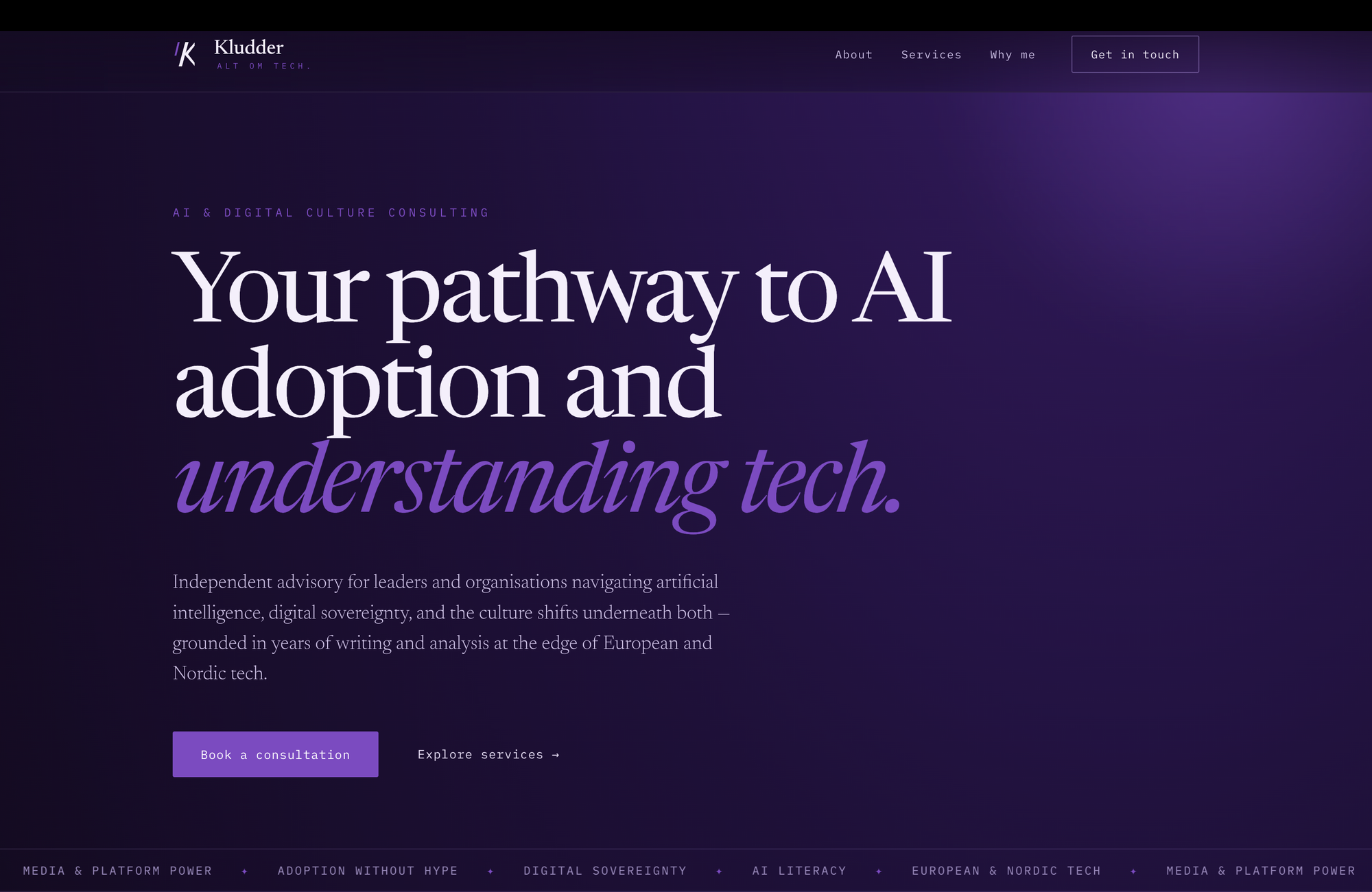
Launching myself as an independent, experienced AI consultant took less time than boiling potatoes (I did them at the same time). The contact form goes to my own email, and from the generated copy it looks like I've been doing this for years.
Still, there are a few telltale signs worth noting.
The Serif Sheriff
Apart from the em dash – which we've all surrendered to the machines – serifs have become a common hallmark of AI-generated content. Is this perhaps Claude's attempt to appear more human?
An interesting article I read tackles precisely this: the arrival of serifs in AI companies' branding. Without diving headfirst into the grammar pot, serifs are the little "feet" on letters when you write in, say, Times New Roman:
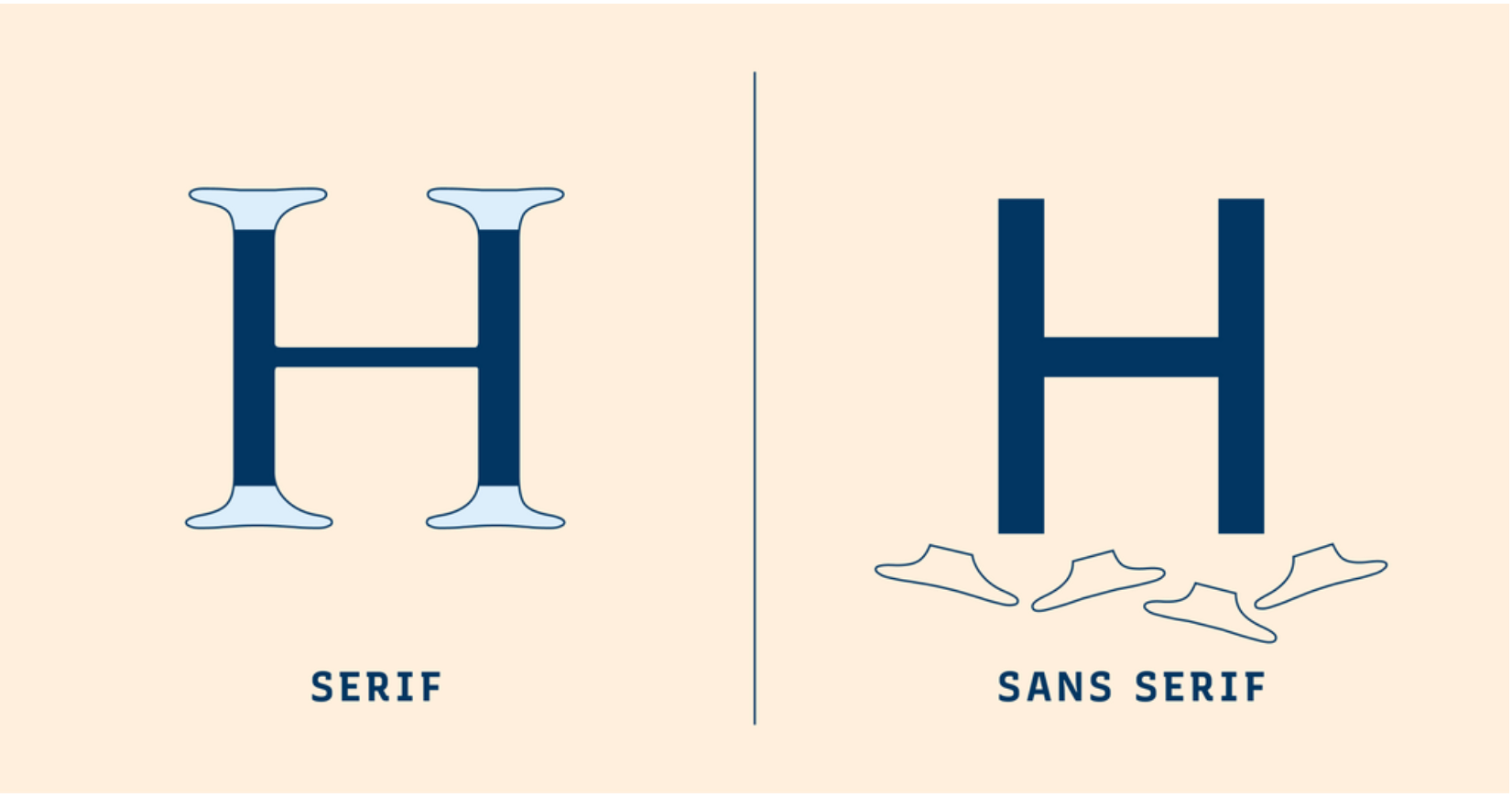
Vadgama, who wrote the article, believes AI companies have embraced serifs because they convey a closeness and humanity.
 Keya Vadgama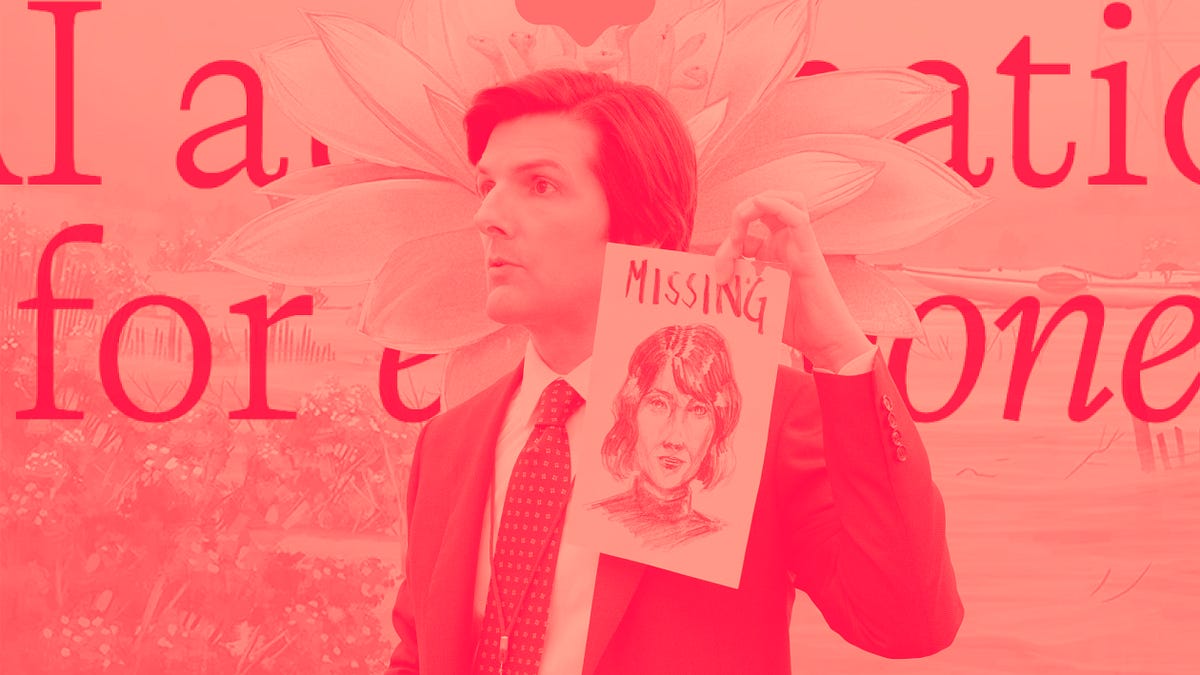
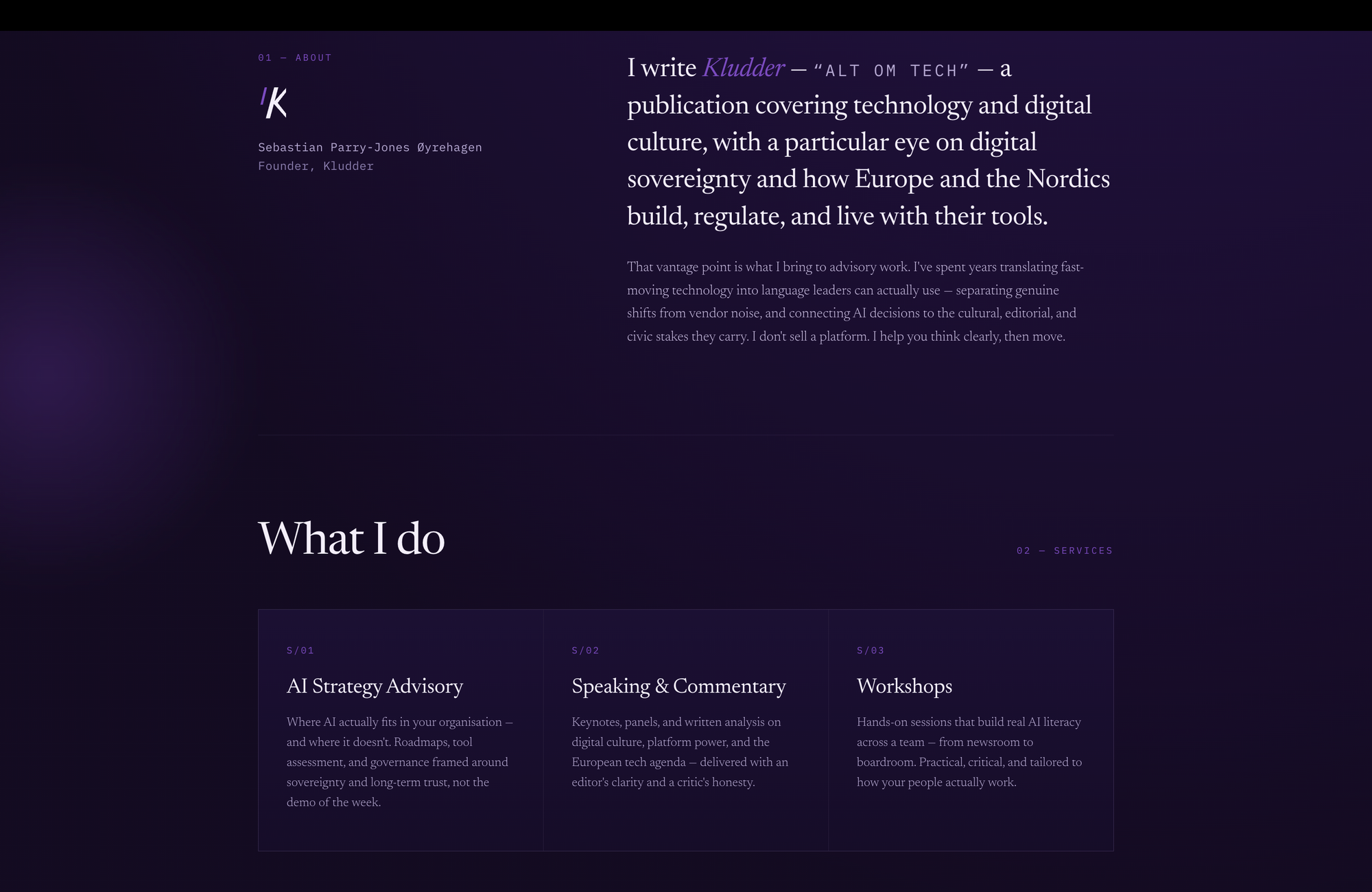
If we swing back to my own fake website, we see a good example of how Claude peppers everything with serifs. It builds credibility, humanity and trust.
Where's the line?
When people don't look like they do in their photos, it shakes our trust. Who are we actually dealing with, then?
Yet the bar for how you appear online has been worn down over a long time. Filters and Photoshop have been around for ages. Snapchat made it socially acceptable to apply digital make-up to selfies, and now AI models are taking it all one step further.
Google's image generator, Nano Banana 4, and sites like artlist.io and headshotpro.com let you easily generate pictures of yourself. That really shouldn't be okay.
In Norway, players like TV 2 – Norway's biggest commercial broadcaster – have opened the door to this being fine. With the World Cup on, you can now AI-generate yourself as a football card, which could have been a fun little thing. But the images that come out polish, ruggedify and remove details in your face that an algorithm doesn't find beautiful enough:

Welcome to Paranoiaville
The tidal wave of AI-generated fakery doesn't look like it's stopping any time soon. Scammers get candidates – already desperate for work in an ever-tougher market – to hand over passport numbers, bank accounts and other kinds of personal information. And they go about it with precision:
Language models can be used to scrape information you've shared on, for example, LinkedIn. Then come hyper-tailored email approaches that lure you into fake interviews. There, the scammer uses an AI filter to look like someone else and runs the recruitment process. People are saying we're living in the Paranoia era, and I completely understand why.
Checking other platforms
To crack down on scammers on both sides, it's becoming increasingly common for companies and candidates to contact each other through other channels. A direct message on Instagram or Facebook can verify that you're talking to the right company.
It's gone so far that people are now advised to set up code words with family, friends and colleagues to reduce the risk of being duped.

Perhaps the antidote is going back to analogue methods again. Setting up code words, asking questions only the two of you know the answer to, or calling back on a different number. It seems the internet has come full circle. From being a place where we could grow wiser, find information and learn something entirely new, it's become a back alley where malicious actors lurk behind every job posting and websites are never what you think.
Then again, that's what makes it a bit exciting too. A bit like paddling in alligator water.
Just watch where you dip your toes.