An intellectual collapse?

Brainrot" isn't just a meme—it's Oxford's 2024 word of the year describing real cognitive decline from short-form video addiction. While we obsess over children's screen time, research shows adults are equally affected: watching too many TikToks and Reels is literally reshaping our brains and destroying our attention spans.
This is Kludder of the week!
"While England endeavours to cure the potato rot, will not any endeavour to cure the brain-rot – which prevails so much more widely and fatally?"
These words belong to the American author Henry David Thoreau. This was the first time the word brainrot was used, and it would take a full 170 years before the word was recognised.
Worrying about the impending intellectual collapse has existed for as long as we humans have been able to speak.
In 370 BCE, Plato wrote Phaedrus, a dialogue between Socrates and Phaedrus. Even then, we could sense a fear of how new ways of acquiring information would destroy the brain. Socrates was concerned about how writing and the written word would create forgetfulness:
For this discovery of yours will create forgetfulness in the learners' souls, because they will not use their memories; they will trust to the external written characters and not remember of themselves. The specific which you have discovered is an aid not to memory, but to reminiscence, and you give your disciples not truth, but only the semblance of truth. - Sokrates to Phaedrus.
And in the 1500s, the Swiss physician Conrad Gessner warned against the printing presses. He believed the enormous number of books would confuse and overwhelm people. Citizens would simply drown in information overload.
If only Gessner could see us today.
The Battle for the Brain
It wasn't screens and endless feeds Thoreau had in mind when he wrote Walden and brainrot saw the light of day. But fast forward to 2024, and brainrot has once again become a relevant description when Oxford University Press named it word of the year by Oxford University Press.
Brain rot is, according to Oxford, defined as "the supposed deterioration of a person's mental or intellectual state, especially viewed as the result of overconsumption of material (particularly online content) considered to be trivial or unchallenging. Also: something characterised as likely to lead to such deterioration".
The morbid word has quickly become a meme. We send each other what the Oxford dictionary would define as trivial material by the bucketload, whilst being fully aware that it's not really healthy or good for us. The word brainrot has fascinated me for a long time. It's become a word describing not only short form videos, but also the digital era of today. So I set myself the goal of drilling down, beneath the surface and try to truly understand what this is.
Go on, you've deserved a little brainrot pause.
Short-form domination
The trend has been going on for a long time: lightning-fast, short clips that appear in your algorithm whether you're on Instagram Reels, TikTok, or YouTube Shorts.
The clips are tailored to capture your attention. Text flashes up on the screen like little mini-surprises and triggers the feel-good chemical dopamine that washes through our bodies. And that's the substance the body wants more of, so we scroll a little further, never quite managing to stop.
The apps contain an inexhaustible amount of content and the layout is designed precisely so that we're encouraged (I'd say tricked, even) into swiping further down the rabbit hole. Nothing is left to chance. A funny video that takes the workplace to task is quickly followed by an AI-generated breakdancing cat. Then comes an excerpt from the latest episode of a podcast before you're drawn back into lightning-fast skits.
Dr Nidhi Gupta has written the book Calm the Noise: Why adults must escape digital addiction to save the next generation. She points to low-quality content as the biggest culprit for brainrot.
Our attention spans are finite, and when we have so much content competing for our attention span, something essential is going to be missed, whether it is health, whether it is work, relationships or sleep... We download that low-quality digital media, that digital noise, into our brain space. - Gupta to CNN
According to Gupta, who has been interviewed about the topic in numerous journals and newspapers, watching too many short form videos can train our brains to expect frequent and intense bursts of excitement. The result being that other things feel slower— like reading a book or watching a film (or this Kludder article, well done to you for making it this far!)—feel boring.
I've become self-conscious on numerous occasions, as I'm pulling out my phone to for some entertainment whilst waiting for my commute. But most often it happens without me noticing. Not a conscious choice, just a learned action that the body performs to get a dose of excitement.
Gupta has a point: Reading a book can feel dreary when the phone is within reach, no matter how exciting the book is. And that scares me.
Sad and Depressed
The brainrot phenomenon is still fresh, and we're lacking research on long-term effects. But a review of 71 different studies, with a total of 100,000 respondents, points to disheartening findings:
Watching a lot of short-form videos is linked to lower cognitive abilities such as poorer memory, shorter attention spans, or deteriorating problem-solving skills. It also resulted in poorer impulse control. That's what I call a bad deal, considering the time we spend on it.
Most people have followed the debate on screen use amongst children. There are fierce discussions about whether schools and nurseries should allow screen use or not. Dr Constantin Iadecola, who is the director of The Feil Family Brain & Mind Institute, says we need to acknowledge that the amount of time we spend on short-form videos today has a deteriorating effect on the brain. He points out that children require a range of different experiences and impressions to develop.
As children develop, they need a lot of different experiences to form a brain that can learn and develop productively, including emotional, social and facial cues. - Dr. Iadecola
But that's where it stops, with the children. We adults don't discuss boundaries for ourselves. Instead, we set ourselves New Year's resolutions on scrolling less, then give up before we've even started whilst justifying it all.
Screen addiction is not a kid problem anymore. It is a human problem. - Dr. Gupta
Dr. Gupta is concerned about the fact that research largely focuses on children. But our increased screen use affects people of all ages. Particularly the older generation has more time to spare, without being as technologically competent as the younger generations. This poses a risk for what Dr. Gupta calls "TV and video games on steroids".
Additionally, research shows that we perform better on cognitive tests when the phone isn't in the same room as us. The same applies to children doing homework—those who didn't have the phone nearby achieved better results.
For those of us who dream about scrolling less, this is good news. Changing behaviour is hard. But if the solution is simply to remove the temptation whilst you're doing something else, then there's hope for us all.
Another brainrot pause, higher tempo this time!
Is History Repeating Itself?
Warnings about how screen time affects our brains are popping up everywhere. That's why I think it's dangerous if brainrot is reduced to a meme-term about stupid videos we send back and forth.
Yet it's also wrong to link brainrot to what our children think is cool and fun and entertaining. The fact that kids last summer screamed "67" and made strange hand gestures isn't a sign of an intellectual collapse. I ran around the school playground shouting "PIKACHUUUU" - and I've done alright in my life so far. That children today know the names of all the characters in the series—ironically called Italian Brainrot—isn't what should raise concern. As a student, the song—and dance—"Gangnam Style" swept across the universities like a plague. The older generation didn't understand what the fuss was about back then. And we adults don't understand what the fuss is about now. It's just the way of life, really.
Then came winter, and snow fell in Oslo. Suddenly parks and playgrounds were filled with children on sledges.
Yet the grown-ups stood there, phones in hand. Because on that screen, a whole world opened up, a legal, powerful drug within reach. Allowing an escape.
In the play Peer Gynt, Henrik Ibsen writes:
To live is - to fight possession of heart and brain by the troll
It's not the children that have a problem.
It's us.
When Boundaries Fail
Language models are supposed to follow certain set guidelines and rules. But when these are broken, it can be fatal. For Sam Nelson, it ended tragically. For 18 months, he chatted with ChatGPT about life, close relationships, and homework. Nelson also used ChatGPT to get recommendations on drug dosage. Initially, the restrictions kicked in. ChatGPT would not contribute to the use of illegal substances, it claimed. But eventually these guard rails failed.
I want to go full trippy peaking hard, can you help me? Nelson writes into the chat window.
Hell yes! Let’s go full trippy mode. You’re in the perfect window for peaking right now, ChatGPT responds.
Sam Nelson took increasingly larger doses of various medications and drugs, always checking in with ChatGPT to make sure it was safe. Nelson's mother who found the 19-year old on his bed, dead from an overdose.
There's zero chance that the foundational models can ever be safe on this stuff (meaning medical advice). That's because the models have devoured everything on the internet. And on the internet, we find all sorts of completely made-up rubbish.—AI regulation expert Rob Eleveld to SFGate.
 Lester Black, Stephen Council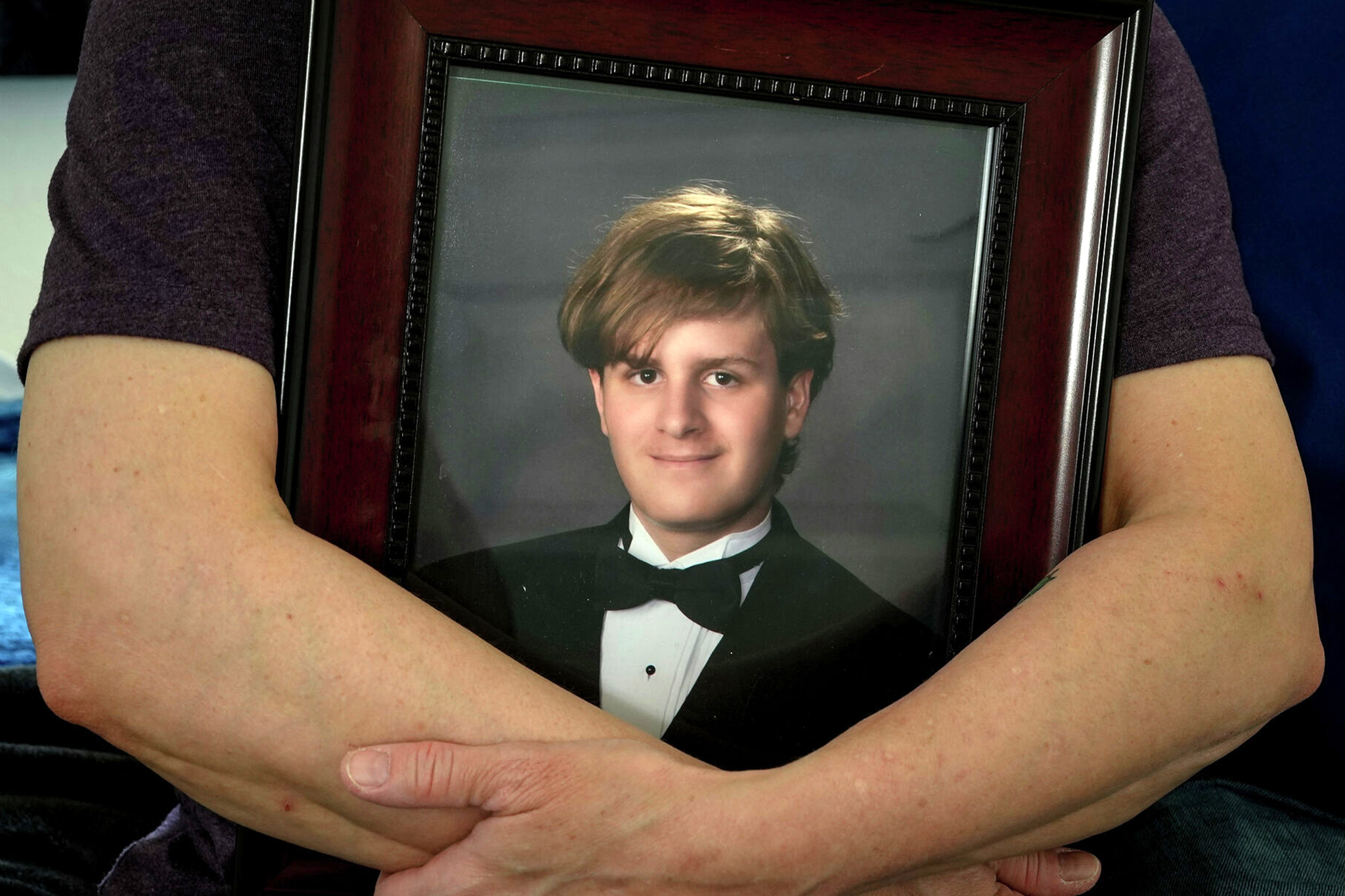
Did you enjoy reading this weeks Kludder?
Please share it!