CEOs are hitting the AI-breaks
It's been in pretty much every outlet over the past month: Dario Amodei, Bill Gates, Elon Musk and Sam Altman are all warning about the dangers of artificial intelligence.
A few months ago, I wrote about AI researchers quitting their jobs after going through some sort of existential crisis. Once again, an employee set the internet on fire by claiming that artificial intelligence could wipe us all out before long.
At the same time, business leaders around the world are urging everyone to adopt artificial intelligence. The competitive edge is being built right now, they say. This week saw a carefully planned budget leak from the Norwegian government: NOK 120 million (9 million pounds) set aside for AI initiatives in 2027.
We're fairly confident that Norway is better placed than most countries to put artificial intelligence to good use – Finance Minister Jens Stoltenberg to the Norwegian business site E24.
It's only been three weeks since we got a new Minister of Digitalisation in Torgeir Micaelsen. Even though he's barely out of the starting blocks in his new role, it's good to hear the focus he's putting on safety and security when it comes to AI.
That tone in particular is a clear shift from the previous Minister of Digitalisation, AI evangelist Karianne Tung. And Micaelsen isn't alone in changing his tune. A new study shows that business leaders have become more cautious about rolling out artificial intelligence. The urge to be first and fastest at adopting AI has been swapped for accountability, security and reputational trade-offs.
The study comes from the global consultancy firm FTI. They asked 1,600 business leaders at large companies across Europe and the Americas about AI adoption and rollout. 60 per cent say they've put it on hold, or slowed down the rollout.
Companies still see enormous opportunity, but enterprise AI adoption is now being shaped by cybersecurity risk, regulatory uncertainty and a growing trust gap inside organisations. – Jon Priestly, Senior Managing Director at FTI.
Priestly predicts that the next phase of AI will be about who can use it responsibly. In that case, I think estate agents have some work to do, with their AI-generated giant children and streets that don't exist:
 Sebastian Parry-Jones Øyrehagen
Have we reached the point where the free-for-all AI-frenzy is being reined in? The most valuable employee is no longer the one who generates the most with AI, or does it best. While governance and security takes top priority, companies also need to get a grip on the costs of artificial intelligence. Several companies have started steering employees towards cheaper language models. Because as the boss of marketing giant WPP puts it, they don't want to be
cracking nuts with sledgehammers– Cindy Rose to The Times.
More and more executives are talking about tokenomics – in other words, keeping tabs on what employees use AI for, and what it costs. If you're interested in how that works, you can click through here:
 Sebastian Parry-Jones Øyrehagen
So, to the question everyone's asking: Is artificial intelligence going to wipe us all out?
Well, that remains to be seen. But leaders around the world seem to have taken the seriousness of it on board and – if not slammed on the brakes – at least eased off the accelerator a bit. Because as our new Minister of Digitalisation told the Norwegian weekly Morgenbladet:
What would the alternative be? Not taking it seriously?
Last week's Kludder post on working from home got people talking. Maybe that's not so surprising, given it's something that affects so many of us. If you missed it, you'll find it here:
 Sebastian Parry-Jones Øyrehagen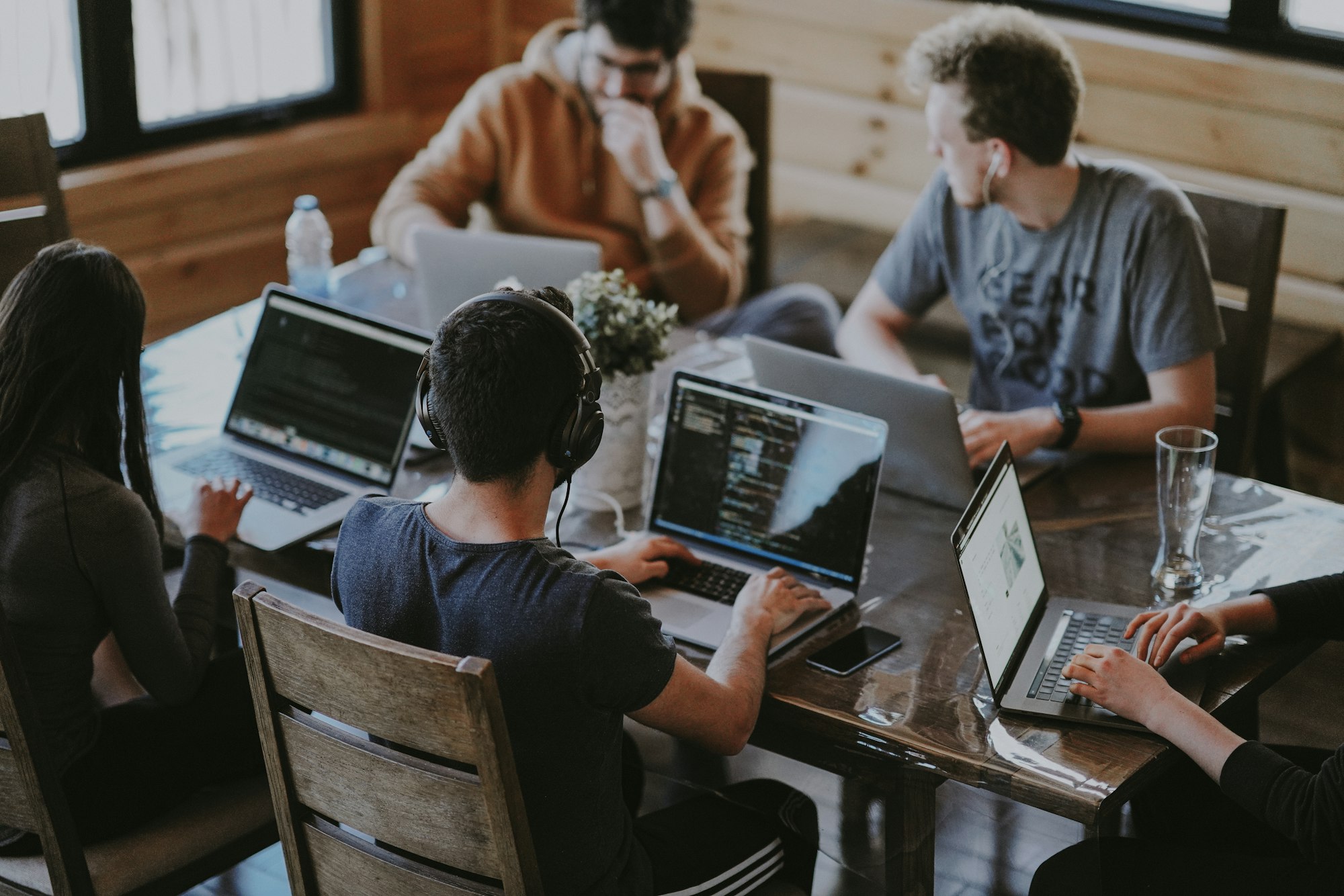
But this week, an interesting article popped up in The Times. Open-plan offices and hot-desking are being singled out as a reason offices around the world have gone quieter. In 1970, the average open-plan office had a noise level of 64.4 decibels. By 2021, the average was 53.6 decibels – roughly the same as light rain.
Around 58 per cent of the world's office workers now sit in open-plan offices, according to Leesman – a company that surveys 1.3 million employees worldwide about their office habits. Harry Wallop, who wrote the Times article, argues that friendships are formed by sitting together over a long period of time, rather than just by sharing interests. He's got a point. It does something to the office dynamic when you get to know the person next to you on a Monday, then it might be 7–8 working days before you sit next to each other again.
Enjoying Kludder? Help me spread the word! Feel free to share me with a colleague, office flirt or a friend.
This week, Karoline Kjønniksen, head of the Norwegian company Fæbrik, told the business newspaper Dagens Næringsliv that:
There's an awful lot of "me" and very little "we"
when employees want to work from home.
Perhaps the problem is that there's become too much "we"? When the battle for desks heats up and forces people up and down between floors, I completely understand why people would rather stay at home. Companies with open-plan offices rarely plan for a desk per employee. That makes the clean desk policy a purely financial measure on the company's part.
Just let people sit with people they know, where the desk is a shred of predictability in a world that's moving faster than ever. That might get the buzz back in the office, people will gather round the coffee machine, and the sense of belonging and togetherness will grow.
It would cost a fair bit, of course. At least then we'd find out how much "we" is actually worth.