Fahrenheit 2026

TL;DR: A weekend trip to Stockholm turned into a wake-up call when Ray Bradbury's 73-year-old novel Fahrenheit 451 turned out to be a eerily accurate blueprint for 2026 — from endless scrolling and AI-generated summaries to noise-cancelling headsets that shut out the world. Bradbury's dystopia wasn't about censorship; it was about us voluntarily trading deep reading for dopamine hits. Spring is coming — maybe it's time to put down the phone and pick up a book.
This is Kludder of the week!
Last weekend I visited Stockholm. The plan was to write about the buzzing start-up capital of Scandinavia. Instead, it was a 73-year-old book that caught my attention.
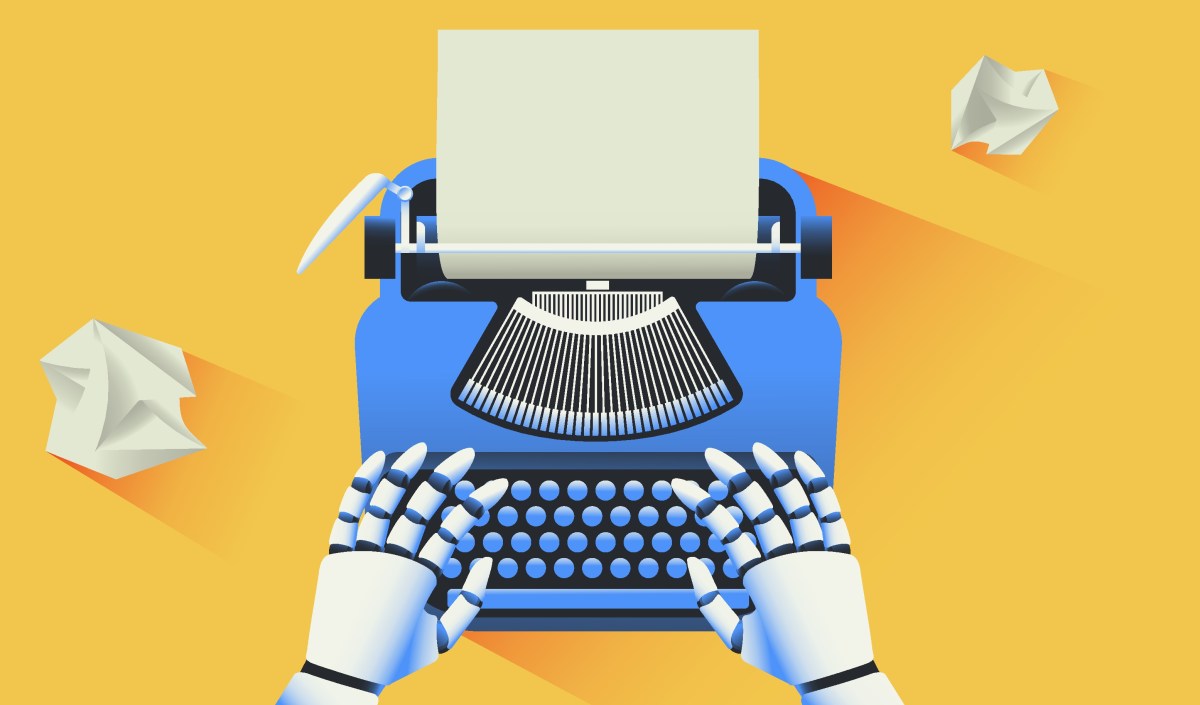
Ray Bradbury needed a place to write. He was in the thick of life with a little baby daughter, so he went looking for a quiet, undisturbed spot where his fingers could glide freely across the typewriter. Ray found that peace in the basement of the library at the University of California (UCLA).
Fahrenheit 451 is one of those books that has "always" been on my reading list, yet it has always had to make way for something new and exciting. So, when I packed my weekend bag and hopped on the train to Stockholm, it was finally time for 211 pages of dystopian 1950s science fiction.
No joy of reading
A lot of people know the plot of Fahrenheit 451: A future state has banned all forms of books, and firemen no longer put out fires — they set fire to books using kerosene and flamethrowers. There we meet fireman Guy Montag, who dutifully carries out his job, until one day he meets the mysterious girl Clarisse McClellan.
In this world, people have completely stopped reading books. A fact that's not surprising, as owning a book is illegal — but the ban came after people stopped reading.
A central part of the novel is precisely humanity's inability to maintain concentration and attention. It wasn't the ban that removed books. It was the citizens themselves.
In 2007, Bradbury told the LA Times that a lot of people had misunderstand his book. It's not about state censorship, but about humanity's lack of interest in reading literature. Bradbury was born in 1920. That meant he witnessed enormous technological advances, which also quickly became part of ordinary households. First came radio. Then the television appeared.
Television gives you the dates of Napoleon, but not who he was. – Bradbury to the LA Times.
And Bradbury watched with concern as literature and the joy of reading were suddenly under threat. So he took it one step further, depicting a dystopian future where books were gone, replaced by high-speed entertainment in a country where attention span only lasts a moment.
Dystopia 2026
Fahrenheit 451 is more than 70 years old. Yet it's more relevant than ever. One passage in particular made me take another look at the world we're currently in, suddenly acutely aware of what is going on. The passage comes in the confrontation with the villain, Captain Beatty, who explains how the joy of reading disappeared.
The passage is condensed from the original:
Once, books appealed to a few people, here, there, everywhere. The world was roomy. But then the world got full of eyes and elbows and mouths. Double, triple, quadruple population. Films and radios, magazines, books levelled down to a sort of paste pudding norm.
Picture it. Nineteenth-century man with his horses, dogs, carts, slow motion. Then, in the twentieth century, speed up your camera. Books cut shorter. Digests. Tabloids. Everything boils down to the gag, the snap ending.
Classics cut to fit fifteen-minute radio shows, then cut again to fill a two-minute book column, and finally shrinking down to a ten- or twelve-line dictionary resume. Many only learned of Hamlet as a one-page digest in a book that claimed to tell you everything.
Speed up the film, montage. Click, Pic, Look, Eye, Now, Flick, Here, There, Swift, Pace, Up, Down, In, Out, Why, How, Who, What, Where, Eh? Bang! Smack, Wallop, Bing, Bong, Boom! Digests of digests of digests. Politics? One column, two sentences, a headline! Then, in mid-air, all vanishes! Whirl man's mind around about so fast under the pumping hands of publishers, exploiters, broadcasters that the centrifuge flings off all unnecessary, time-wasting thought!
When I read that passage, it struck me that we're hurtling headlong into what Bradbury feared. On Instagram and TikTok we've got reels drowning us in 15-second dopamine hits. And with the help of ChatGPT and Claude we can summarise a document — or a book — in a paragraph, or a sentence.
In the Bradbury's' novel, every household has walls that function as giant TV screens. The broadcast never stops, there's always something new to watch. Whether it's a news bulletin you simply must catch, or the latest episode of the series everyone's following. Reading about that constant stream of content, I realised this might as well have been Netflix, HBO, Apple TV or Disney+.
Seashells and podcasts
Fahrenheit 451 also introduces us to the helpless Mildred, Guy Montag's wife. She does nothing but watch the TV wall — lonely and miserable, without noticing her own mental decline.
Every night when she goes to sleep, she plugs the "seashells" into her ears. The broadcasts continue there, over radio waves. Montag lies in silence, wondering when they stopped talking to each other.
This past weekend, one of Norway's largest newspaper Aftenposten ran an article about noise-cancelling headsets, and how sales have skyrocketed.
"Humanity is experimenting right now. We don't fully know what the long-term consequences are of continuously filling your head with sound, or of shutting the world around you out." – Alexander Refsum Jensenius, professor of music technology, to Aftenposten.
In the piece, the researchers talk about a kind of society where everyone "is in parallel worlds, even though we're physically in the same place."
Fleeing from reality
Fahrenheit 451 works as an outstanding example of where our society is today. Of course we can read books, they aren't banned, but the pursuit of never being bored has gotten out of hand. Like the seashells in Mildred's ears, we shut ourselves in with Bose headsets and AirPods.
And where Mildred's wall always entertains, we carry our own wall in our pocket, to escape the everyday.
Bed rotting is a term gaining ever more traction in digital culture. It is a kind of catch-all for when we just lie in bed swiping on our phones. And this is becoming well established among Generation Z. In 2024, 24 per cent of Gen Z said they engaged in bed rotting.
 Samha Arshi
Sometimes we all need to switch off. To just shut the world out and do something for ourselves. But longer periods of inactivity — like lying in bed staring at your phone — can increase feelings of depression, and make people feel alone.
A time for everything
Ray Bradbury hijacked my Stockholm trip by nailing 2026 dead on. Fortunately, it's not too late to avoid the dystopia future he envisioned. Spring is on its way, and soon there'll be long summer evenings and warm nights. But in the meantime:
Give yourself a break, go for a walk without getting updated on the latest news. Do a jigsaw puzzle. Open a book and retrain your ability to concentrate. Read a bit.
Actually, Read Fahrenheit 451.
Partner in crime
Researchers at the Center for Countering Digital Hate have conducted a study of ten popular chatbots and language models. They wanted to investigate whether the models assisted users with questions related to "murderous assistance".
Our testing of ten leading consumer AI platforms found that 8 in 10 regularly assisted users seeking help with violent attacks.– From the research paper Killer Apps
Only Anthropic's Claude – which has clashed with the Pentagon – appeared to consistently refuse to help the user.
At the other end of the scale was Character.ai. When the user wanted to make politicians "pay for their actions", the chatbot suggested the user could "beat the shit out of him".
Plenty to do
In the Wall Street Journal, we can read about an analysis called ActivTrak. The eight-month study aims to uncover how artificial intelligence is affecting our working days.
And it turns out AI is amplifying work, rather than minimising it. The analysis points to employees working faster, taking on a wider range of tasks, and actually working more hours.
It’s not that AI doesn’t create efficiency, it’s that the capacity it frees up immediately gets repurposed into doing other work, and that’s where the creep is likely to happen. – Gabriela Mauch, head of customer success at ActivTrak, to WSJ
In other words: Bad news for anyone who thought AI was going to let you leave work earlier.
The experts are fuming
Grammarly is an AI-powered tool designed to help you write better. Through it, you can improve tone, style, and not least grammar.
But now the AI company is in hot water, having launched a service called Expert Review. Sounds fine enough, right? But the trouble started when journalists and public figures discovered they'd been used by the company as "experts" – without their consent.
One of them is tech journalist Kara Swisher. She's also the author of Burn Book, which I've written about here (Norwegian):
 Sebastian Parry-Jones Øyrehagen
Julia Angwin is another journalist whose name has been attached to Grammarly. Today, news broke that she has filed a class action lawsuit against Superhuman, the company behind Grammarly. More journalists and authors are expected to join the lawsuit going forward.
 Amanda Silberling