What Is Sovereign AI? Why Europe Wants Its Own Models

Last week was a rundown of the steps the EU and European countries are taking to make themselves less dependent on the US. It didn't take long for the Americans to respond — reminding us that Claude, ChatGPT, Gemini, and other technologies are only available for as long as the Americans allow it.
The relationship between the US and Europe has shifted dramatically in just 18 months. Europe is adopting a tougher tone, and wants to take greater control over the supply chain when it comes to emerging technology. Up until now, this has been the kind of thing that's sailed right over our heads. After all, the EU has just been regulations and directives, hasn't it?
But this week came the reminder that what Ursula von der Leyen at the European Commission, or the UK's AI minister Kanishka Narayan, says affects all of us — and the services we use. I noticed it through my own MacBook Air, sitting safely (or so I thought) on St. Hanshaugen in Oslo.
Blink and you miss
I'd barely had time to check out Claude's latest model, Fable 5. Built on Mythos, this version of Claude was supposed to be the most powerful yet. It's been a deliberate choice on my part not to write about Mythos. It hasn't been available to the public, and I've struggled to work out what's been marketing from Anthropic — which is now heading for a stock market listing — and what's been genuine cause for concern.
The few who've had access to Mythos have been other tech giants, like Microsoft and Oracle. Together with a handful of others, they've been part of Project Glasswing, with the aim of preparing as well as possible for the wave of sophisticated cyberattacks expected to follow the day Mythos becomes widely available.
But exactly what they've been working on, and just how powerful this model is, we haven't been able to say with any certainty. And I'm not keen to turn Kludder into a free marketing channel for AI companies.
After just a few days, though, it was all over. Donald Trump and US authorities forced Anthropic to shut the model down for "any foreign national, whether inside or outside the United States, including foreign national Anthropic employees", according to the company itself.

The Anthropic headache
I might be stretching things a bit by tying this to Europe's own tech ambitions. Earlier this year, Anthropic was labelled a supply chain risk by US authorities. The background is that Anthropic wanted to set limits on how authorities could use their models for military purposes. The falling-out between Trump and Anthropic CEO Dario Amodei is well documented.
It may be that the Trump administration wants to make an example of what happens when tech oligarchs don't jump when the president tells them to. By forcing Anthropic to pull its models, the administration is throwing a very large spanner in the works for a company that is well on its way into the stock market.
But I also think it should serve as a reminder for those of us who use these services. That they're only available for as long as the US allows it. And it's not as if Claude has become completely unavailable — we can still use the other models.
The ones that aren't as good.
Bargain-bin models
So what happens if we end up with a Europe that's seeking greater control — cutting out American services and turning its gaze inward? The Anthropic episode has shown that we could find ourselves in a situation where the best models are reserved for Americans. And the same could apply to Chinese language models like DeepSeek.
Perhaps we end up in a situation where Norwegians get an inferior version of Microsoft Copilot compared to their American colleagues. That might mean that free trade as we know it is over. Instead, we're looking at a world where governments don't just impose tariffs or subsidies, but directives on which products can be made available beyond their own borders — and, perhaps more importantly, who's actually allowed to use them.
Betting on sovereign AI
In Canada, one of the world's leading researchers, Aidan Gomez, is building up Cohere. The company was founded in 2019, but seems to be finding its footing as the appetite for digital independence grows. Cohere provides language models aimed specifically at governments and businesses. Just under a month ago, they acquired a German AI company, Aleph Alpha. Here's what Gomez had to say at the time:
Combining the strengths of Cohere and Aleph Alpha accelerates our global expansion and advances our mission to deliver sovereign AI to nations around the world… built on the bedrock of shared Canadian and German values where privacy, security, and responsible innovation are of the utmost importance, we are uniquely positioned to be the world's trusted AI partner. – Aidan Gomez, in a press release.
 Alexandra Tremayne-Pengelly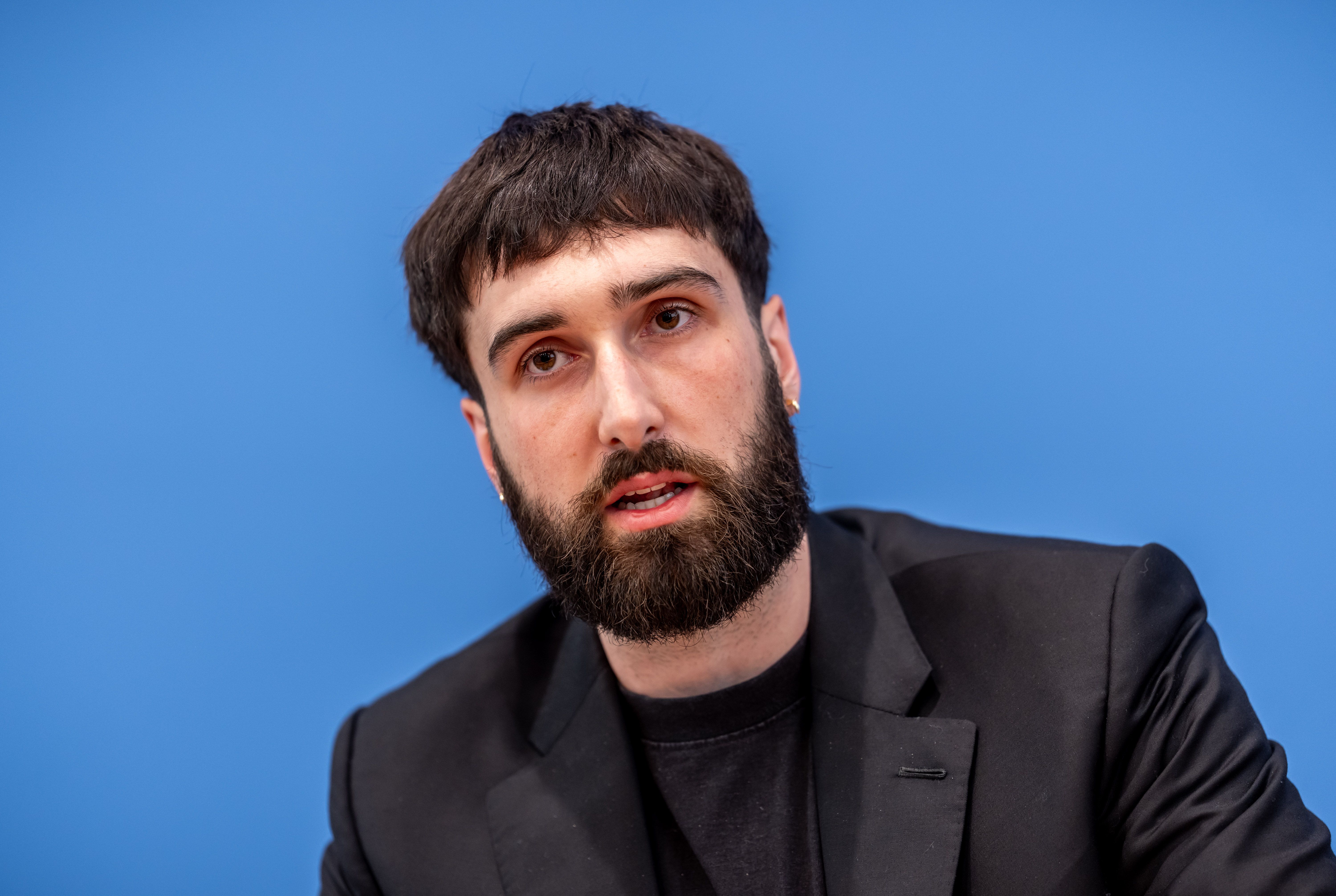
Cohere is positioning itself as a safer alternative to other (American) model developers. They promise not to retain customer data, and offer a model that can be deployed locally or in private clouds — making it attractive to governments and heavily regulated industries. In the UK, where they're now opening a London office, their client list includes the Department for Science, Innovation and Technology.
It'll be interesting to follow Cohere going forward. The Canadian startup seems to have caught the mood of the moment. And European governments are a lot more warmly disposed towards Canada than they are towards the US right now.
"It has no impact on us"
This week also brought a G7 meeting. The UK, Japan, France, Germany, Italy, Canada, and the US gathered to discuss — and hopefully improve — cooperation between them.
The US and Trump did sign on to a closing statement expressing unwavering support for Ukraine. But the president was also quick to add:
It has no impact on us, other than we sell weapons. – US president Donald Trump
Perhaps this is just the president's usual chest-beating. But it might also be the way he sees Europe:
What happens over there is none of his concern. The US just sell us AI and stuff.