A stay in 1894
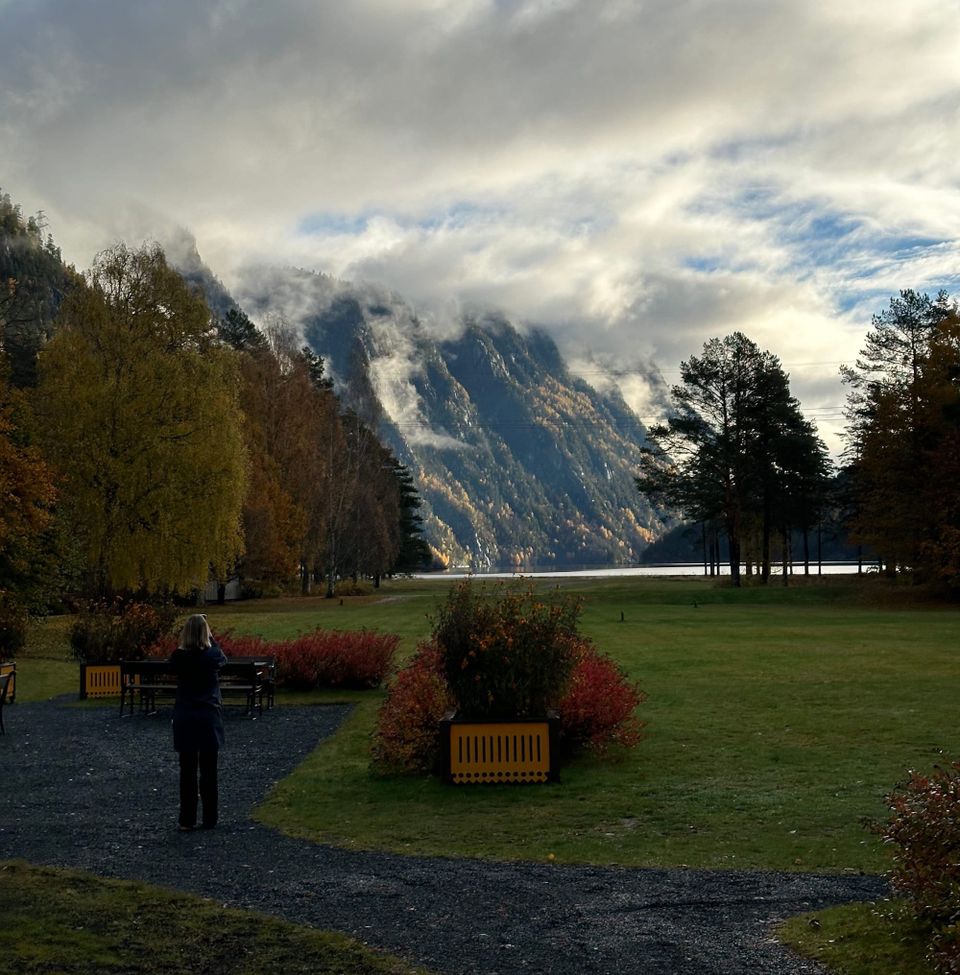
Last week, tech, scrolling and screen time were swapped with a fireplace, books and storytelling. For me, it was also a reminder of what artificial intelligence can’t generate.
I took the family on a little trip to Dalen, a small village in Telemark in southern Norway. With our ears popped, we parked the car by the grand old hotel, which opened in 1894. The storm fittingly named Boelo - meaning “strong”, was about to wreak havoc in both Norway and Britain.
Arriving the little village was amazing. Unlike Copenhagen, London or any other big city, where the world just seems to race along as fast as ever, Dalen became a long-awaited pocket of analogue life.
For one thing, there was no TV in the room, meaning no channels to mindlessly flick through while waiting for dinner. Instead, I headed out into the rain and trudged down towards the Bandak Canal, which opened out towards the horizon. It could have been a fjord, with huge mountains climbing up on either side. I assume that’s how Dalen (meaning literally "the valley") got its name.
The grass was covered in a layer of bright yellow leaves, and I caught myself just standing there, listening to the wind whistle while I crumpled a leaf in my hands. That was all it took to keep me entertained. Then we trudged the short way back to the hotel and found warmth in front of the fireplace.
This autumn I decided to finally read a proper classic: Dracula by Bram Stoker. When someone says Dracula, we all picture the same thing. A man in a cape, with sharp fangs and deathly pale skin. Stoker actually ended up in the Guinness Book of Records for Dracula. The bloodsucking count, invented by Stoker, has been portrayed more than 700 times since the book was written in 1897. But it struck me that I knew nothing about Stoker’s novel, so there was only one thing to do: Get reading.
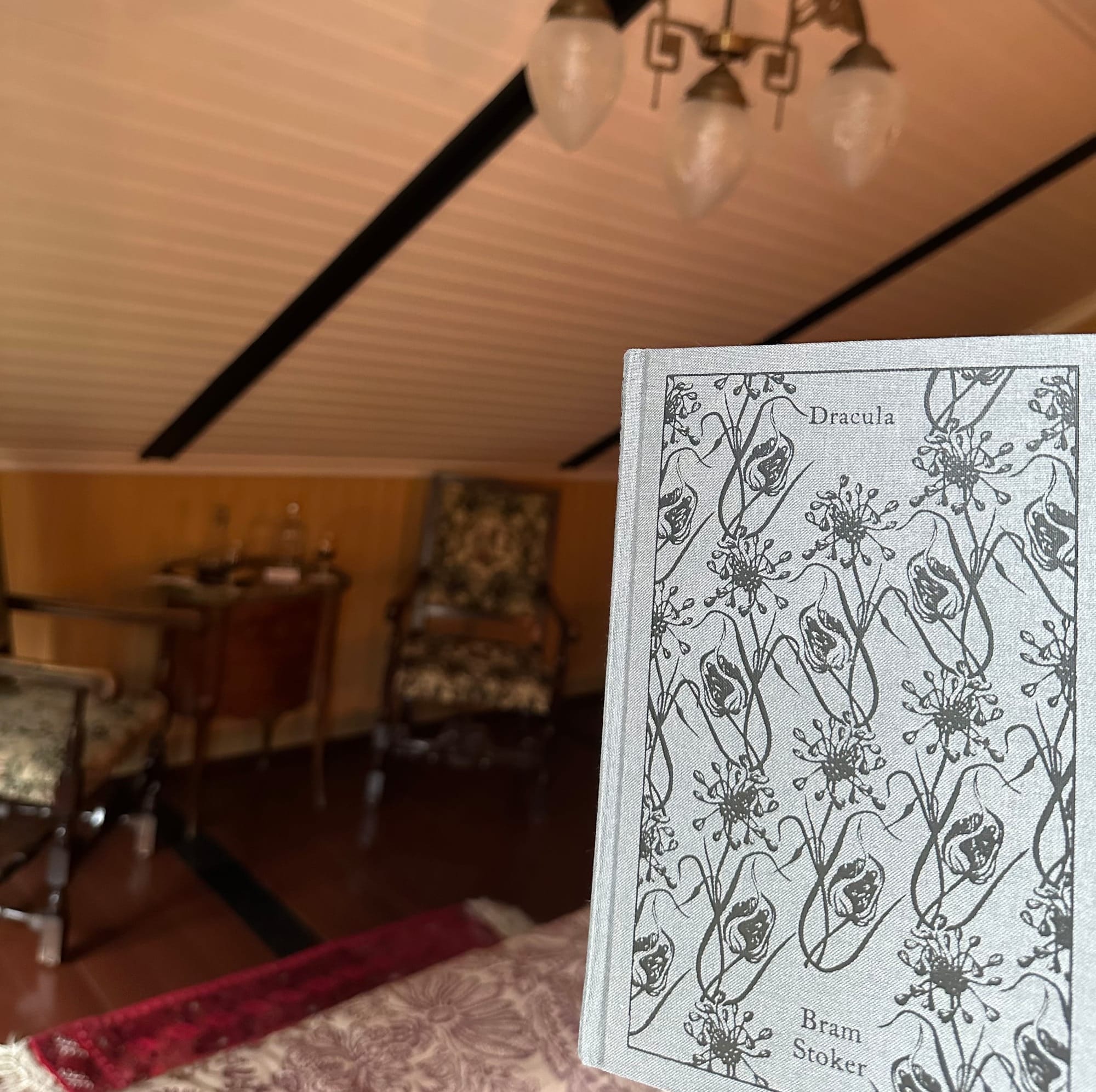
In that sense, it was the perfect fit to read a Gothic horror novel in a hotel room built in the same era. Lying on a divan, I read, undisturbed. I didn’t even notice my phone. It quite simply didn’t fit the vibe of the hotel, like it was a piece of tech not belonging there. Anything resembling screen addiction vanished the moment I walked through the doors at Dalen.
Worth reading:
 Sebastian Parry-Jones Øyrehagen

Let me be clear: This is not sponsored content for Dalen. The point I’m trying to make is that we could all do with a break now and then. When the world is racing along and we’re feeling a collective tech fatigue, we have to slow down.
Enough with the public TikTokery
At roughly the same time as I was sitting in a time capsule from 1894 reading a book from 1897, the UK Prime Minister, Andy Burnham, went to “war” on people playing loud music through phone speakers on public transport. We’ve all been there: standing on the bus, tram or train when someone pulls out their phone to watch reels or shorts at full blast. Somewhere between the iOS updates, we lost our manners. What’s extra absurd is that some of you Kludder readers may have done it yourselves – polluted public transport with noise.
Please stop.
Anyway, in the UK that kind of behaviour can get you thrown off the train. You could also be fined £100. How Burnham plans to enforce this, is still up in the air. Is it the ticket inspectors’ job to keep an eye on it? Or does Burnham expect passengers to start reporting each other?
Enjoying Kludder? Help me spread the word! Feel free to share me with a colleague, office flirt or a friend.
Bedtime story
At 10 pm, Boelo was creaking in the walls of the hotel. I was sitting down in the lobby with five other people I’d never seen before. The receptionist rang a bell. It was time for storytelling. For fifteen minutes, she talked. About stones from Dalen that have been found in Istanbul and in the British Isles, carried there by Vikings. She told us about the Bandak Canal, built to make it easier to float timber down to Skien. When the Germans invaded Norway, they took a liking to Dalen Hotel and moved in. When they were driven out of the country, they took more or less everything the hotel owned.
But the hotel was on the verge of disappearing, forgotten by time, until an eccentric preacher named Aage Samuelsen restored it in 1992. The receptionist told us all of this in that one quarter of an hour. I looked at the other guests, and it struck me that we weren’t so different from the guests of the 1800s. Or from Jonathan Harker in Dracula. We were travellers sharing an experience, sheltered by the crackle of the fire. Every one of us sat there listening while she spoke. In here, there was no AI, no smart glasses, and no AI bubble. Now and then I caught someone’s eye and we smiled – that slightly shy smile Norwegians have perfected. When she finished her story, we got up, one by one, said goodnight and went to our rooms.
Not a single phone or screen in sight. It was bliss.