Social Media Detox: What Happened When I Quit the Algorithm for a Summer

Summer is over, and that means Kludder is stepping away from the beach and back into your inbox!
It's a gentle start to the fall for Kludder. Whereas next week will take a look at a job market that has worked out it needs people after all, this post is the story of what happened when I cut out all algorithm-driven content over the summer. And how the algorithms found me anyway.
In June I decided to go on a complete algorithmic detox. No Facebook, Instagram, Reddit or LinkedIn. And since I was on a roll, I put Snapchat on the blacklist too.
Because how does the brain react when the dopamine hit shortcut disappears? That's what I wanted to find out. So, on the third of June, I decided to cut the algorithmic umbilical cord.
Plenty of relapses
The first two days were full of relapses. The apps I blacklisted weren't deleted from my phone, but I removed the icon and the option for the iPhone to suggest opening them. That's how I've had it for about a year now.
Even so, my fingers went swiping off towards the search field, typed "ins", and hey presto, I was back on Instagram. My brain was quite simply programmed to pick up the phone and tap its way into a social medium, without me being aware of it myself. This happened in the lift, in the queue at the supermarket, or on my way from the kitchen to the living room. The battle for my own attention was heavy going, which isn't so surprising: Meta has behavioural researchers and psychologists working to make the apps and the content as addictive as possible.
On day three something started to happen. There were no more relapses into the apps, and my screen time was already down by ninety minutes. Which was a realisation in itself: The fact that I spend ninety minutes on social media every single day. That's like watching a movie. Then again, it's not that bad, all things considered.
According to an Instagram post – ironically enough – from Statistics Norway, the national statistics bureau, people my age in Norway have a screen time of 5 hours and 41 minutes. Young people between 16 and 24 top the table with over seven hours of screen time a day!
Think how much of that time is unconscious phone use. If you ask someone to tell you about the reel they last watched, and what it was about, they'll struggle to answer. These apps are like giant lucky dip bags that pull you in without you noticing it.
My motivation for cutting out social media picked up after reading The Sirens' Call this spring. I've written a review of the book too, which you can read here:
 Sebastian Parry-Jones Øyrehagen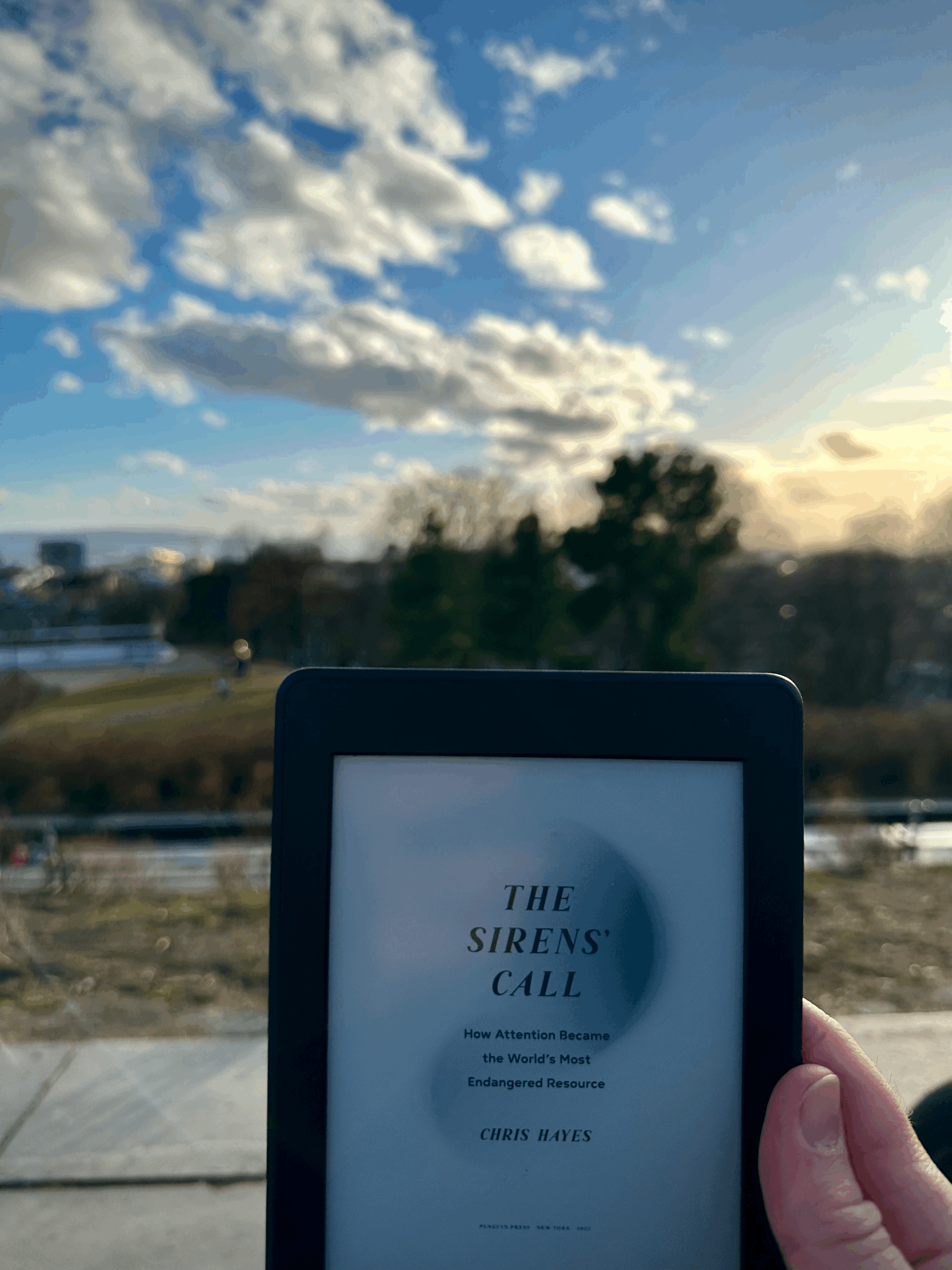
The thought of giving Meta, through Facebook and Instagram, or Microsoft via LinkedIn, my attention became repulsive. So I was pleased to have taken back control over my own time. I read more books, and felt sharper in the mornings. On top of that I noticed my focus improved, and I had more ideas.
Then it happened.
The substitutes took over
I kept a steady eye on my screen time as it dropped. Less and less time was spent on the phone – I even found my old notebook and started jotting down ideas and thoughts! But at some point something else turned up in the list of my most used apps: finn.no.
The marketplace on finn.no – Norway's giant classified ads site, basically our version of Ebay – is overflowing with furniture, watches, boats, clothes and strange things nobody actually wants. But in the flush of victory over having cut out Zuckerberg's attention traps, Schibsted, the Norwegian media group behind Finn, saw its chance to exploit a brain on the hunt for rewards. Suddenly I was looking at property I'll never be able to afford. 42 minutes I'd spent on Finn over the course of a day.
I wasn't after anything, and what I was looking at was things I had no interest in: a Lego collection going for more than $2000 and a typewriter that didn't work.
Like a child looking for loopholes, I'd managed to navigate my way to apps that gave me much the same satisfaction as a social medium.
Platform panic
I cannot remember the last time I received an email from LinkedIn og Meta. Who even wants emails from them?
Even so, within my first two weeks without social media, emails started ticking in from LinkedIn. And when you'd expect a job platform to send you exciting job opportunities, what I got was Facebook-worthy: Emails about people in my network having recently had a birthday!
They started arriving at weekly intervals, totally uninteresting. Was this LinkedIn's strategy to lure me back?
Safe to say, it didn't work.
The social media holiday delivered
Eventually I managed to cut out finn.no as well. Screen time took another nose dive, and never have I read more books during a summer holiday – and that in my first holiday as a father.
World Cup fever raged across Norway, and the water was consistently perfect for long days at the beach. My yearning for social media evaporating by the day. I started noticing everything else around me. Out here in the real world.
My fondness for editorial media grew even stronger, now that I had time to read the papers.
The irony of it all: Despite the fact that no feed, reel or post was able to get my attention, I didn't miss out on a single thing.