A new year beckons

Kludder's first year is a wrap: From hallucinating AI in the therapy room to genetically modified mammoth mice. 2025 was the year "tech oligarch" became Norwegian word of the year, social media drowned in AI-slop, and Disney turned to AI. Meanwhile, Kludder got exclusive access to Sam Altman's biographer.
This is the last Kludder of 2025!
2025 was the year Kludder launched. On 2 March, the world's very first Kludder article went out – to five subscribers.
Then things took off.
Since then, nearly every Thursday has been filled with pieces about technology of all shapes and sizes. And you have all been faithful readers, while a steady flow of readers subscribed to their Thursday tech-fix.
At first, some of you needed convincing. "Will there be enough to write about?" was a question I often received. Now that the year's nearing its end, we can safely say there's been more than enough.
New names
2025 was the year tech oligarch became word of the year in Norway.
A tech oligarch owns technology companies with near-total control over digital technology and thereby enormous influence over the entire world. This year's word can help raise the debate about digital sovereignty in Norway, says Åse Wetås, director at Språkrådet.
In Australia, the word of the year was "AI-slop". Put simply, AI-slop describes low-quality AI-generated content flooding the internet.
Which makes sense, as 2025 was the year social media overflowed with AI videos and images. AI is being used for entertainment, but also to sow doubt about what's actually real. Still, every cloud has a silver lining - the time I spend on Instagram and Facebook has plummeted this year.
And I've never read as many books as I have this year.
Chasing the winning ticket
The world is moving into unchartered territory. OpenAI, the AI-company behind the language model ChatGPT, reports over 800 million weekly users, and they expect to hit a billion in 2026. This new LLM-stuff is fun, and I use it actively myself.
Yet language models have also led to tragic outcomes. Like Sewell Seltzer III, the 14-year-old who took his own life after chatting with an AI avatar on character.ai:
 Sebastian Parry-Jones Øyrehagen
According to The Ada Lovelace Institute, over 830 million people use AI apps designed to establish friendships and relationships. Such tools can help with loneliness. But the very same apps can also be addictive.
It gets dangerous when companies use generative AI irresponsibly. character.ai claims its avatars have become better at detecting dangerous and harmful behaviour amongst its users. This was the year we began seeing potentially harmful use of AI here in Norway as well.
Thursday 18th December brought news that Kipler AI, A Norwegian-made AI tool used by psychologists in therapy sessions, isn't entirely trustworthy.
The Norwegian newspaper VG tested the tool and found it hallucinated (made up) several things. Based on a text chat, Kipler confidently misreported on both facial expressions and physical movements – despite never having seen, heard, or spoken with the person other than via text.
When VG passed this information to the Directorate for Medical Products, Kipler withdrew the entire service related to patient analysis.
 Ola Haram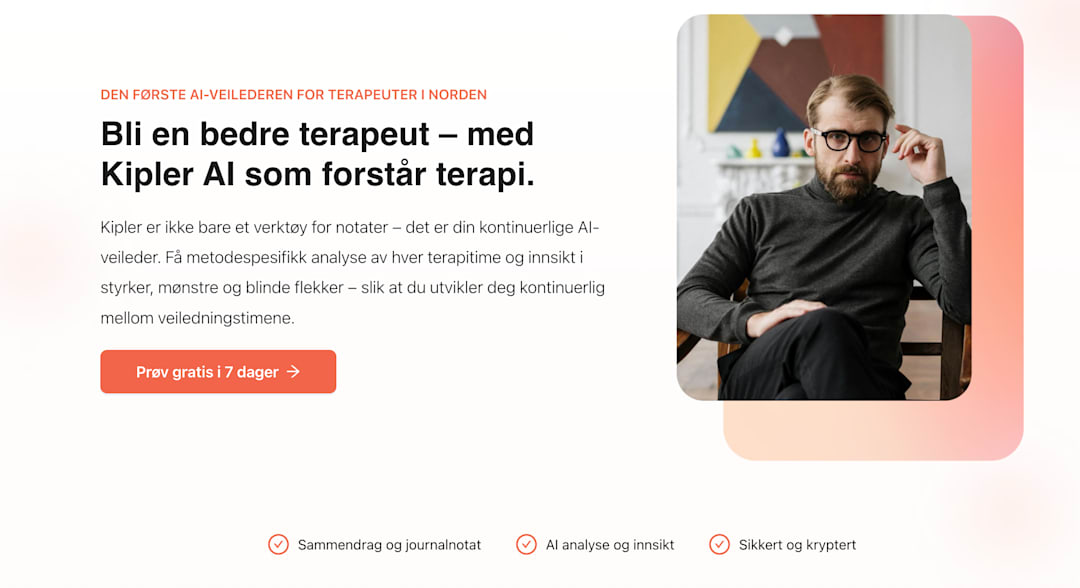
Kipler AI was piloted on patients until VG raised questions about its use.
Millions of services aimed at different industries and professions exist today. The vast majority strike me as "GPT-wrappers": The service offered is essentially built on a language model like ChatGPT, then wrapped up and presented as something unique.
It's good that newspapers like VG scrutinise these companies. We know hallucination is a weakness of language models. Unleashing this on patients in psychology sessions, as Kipler has admitted to, is both irresponsible and dangerous.
Christmas is the time for giving! So why not give Kludder as a gift?
Remember the mammoth?
One of the Kludder-articles that prompted discussions was the one about de-extinction and designer babies:
 Sebastian Parry-Jones Øyrehagen
Back in April, I wrote about Colossal Biosciences (CB), a company specialising in de-extinction. They genetically modified mice to develop mammoth-like traits. Now CB hopes to do this on a larger scale going forward. And perhaps they'll become saving angels for wildlife:
Colossal Foundation, the non-profit organisation connected to the biotech company, has just secured funding of over a hundred million dollars. They'll use the technology to combat extinction. And it's desperately needed: globally, wildlife populations have plummeted by 73 per cent since the seventies.
It's precisely this contrast between dangerous uses of technology and uses that can potentially reverse animal extinction and restore biodiversity that Kludder is built on. The fine line we're walking between total tech dystopia and a world where new technology is used to make life more liveable for us all.
That time Kludder got an exclusive
2025 was also the year Kludder came closer to Sam Altman than ever before. Suddenly I found myself feeling that we'd landed right in the middle of the rat-race to AI-supremacy.
Keach Hagey followed Sam Altman for two years, and wrote his biography. When I caught wind of it, I did what any curious person would: I got in touch with Hagey.
Artificial intelligence is a global phenomenon, but today's AI leaders have their origins in the distinctive cultural environment of Silicon Valley. In the book The Optimist, I map out how Sam Altman has personified this culture right from his teenage years – how he, to quote his mentor Peter Thiel, finds himself "at the absolute epicentre" of the Silicon Valley zeitgeist, Keach tells Kludder.
Books to read
Naturally, I had to read Hagey's book. I've written a review of it here:
 Sebastian Parry-Jones Øyrehagen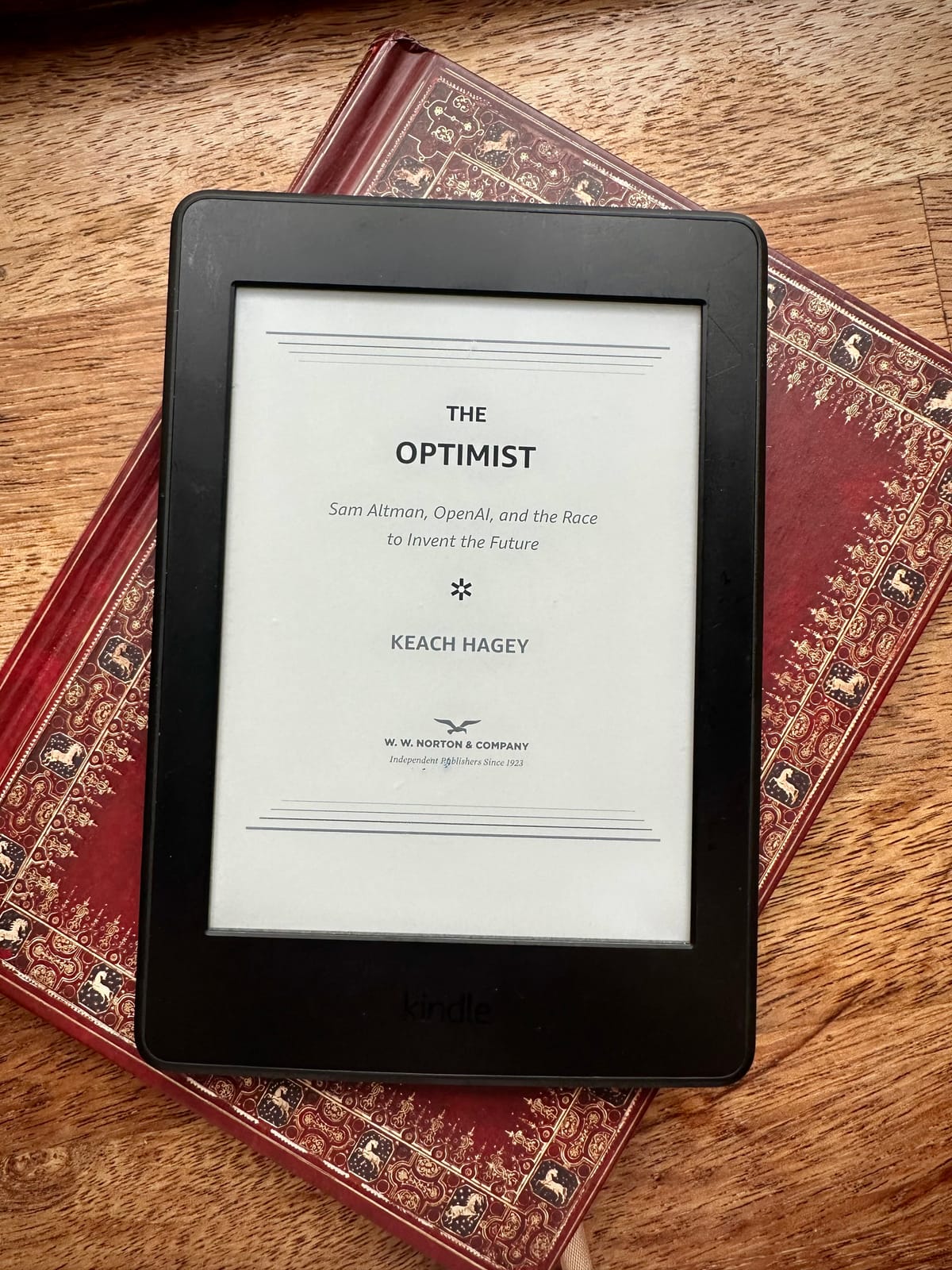
The book that really caught my eye this year was Careless People by Sarah Wynn-Williams. Wynn-Williams is the executive who worked in closely with Mark Zuckerberg and the rest of Facebook's leadership. Her experiences of the company bear witness to a – finally I can use the word – tech oligarch who has put growth ahead of everything else. Even democracies have had to step aside in Facebook's thirst for your screen time.
I tried to get in touch with Wynn-Williams, but following a lawsuit from Facebook, she wasn't allowed to talk about the book. She simply wasn't allowed to promote in any way. And that in itself became the promotion that sent the book straight into the bestseller lists around the world. You can read the review here:
 Sebastian Parry-Jones Øyrehagen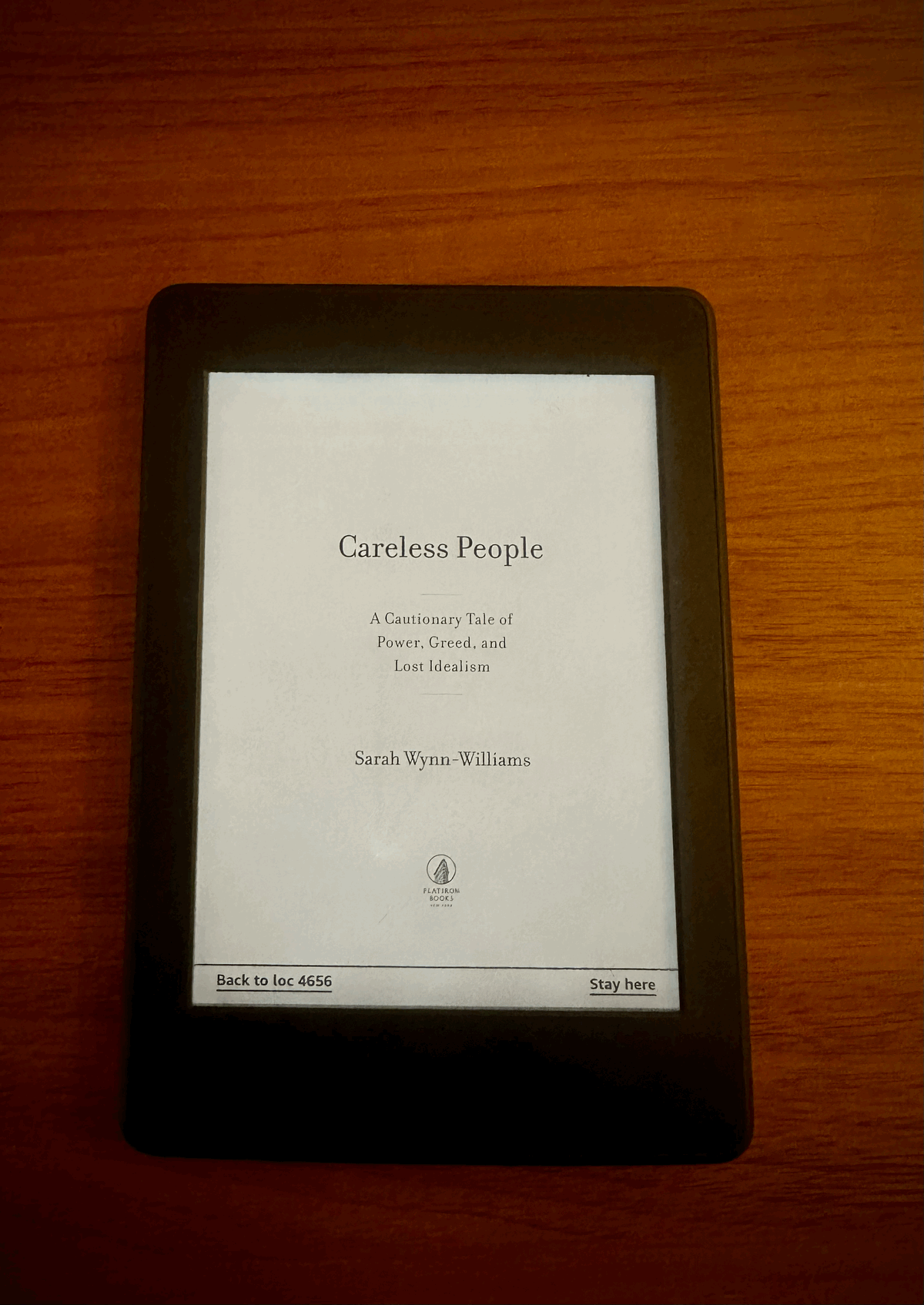
A new year, but first…
There hasn't been a shortage of tech things happening since Kludder saw the light of day. It all began as a hobby project (still is), but Kludder is now read by Norwegian businesses and employees when they want to learn more about AI. The fact that Kludder remains relevant is something I'll be taking with me into the new year.
Throughout 2025, I've also watched with concern as Norway's job market has been struggling. Recent graduates are finding it hard to get jobs, something that's been broadly covered this autumn by the Norwegian news outlets Dagens Næringsliv, E24 and VG.
I published the first article on the looming wave of unemployment 6th of March. The responses I got were that I couldn't compare us with the USA. Just you wait and see, I said. Unfortunately, it looks like I was bang on.
Rumour has it Kludder has found its way into the corridors of the Norwegian Parliament! Perhaps we'll finally see forward-thinking, tech-competent members of parliament in the years ahead?
In any case, I'll do my part making us all more enlightened when it comes to technology. To make us all a bit more sceptical about how tech affects us – whilst still ensuring we play around with it.
From data centres to the NFT collapse, from Hollywood to a four-day working week.
Kludder wishes you a Merry Christmas, happy holidays and a happy new year.
See you in 2026. I doubt there'll be less to write about in the coming months and years.